Some things need to be said. Not everything needs to be shown.
Some things need to be said. Not everything needs to be shown.
Not all stories come with contrasting pleasant and tragic parts – some are tales of pain and trauma in their entirety. Stories of women set in ancient times, especially Biblical women, often reflect the violence, trauma, oppression, and coercion that formed the societal norm. So the challenge as a writer isn’t whether to acknowledge that reality, but how. How do you honor the weight of what women endured while still caring for the reader who has to walk through those moments with you?
That was the struggle I had to deal with while writing Beyond the Well, especially in the chapters involving Mordecai. His violence toward Photine isn’t sensational, and it isn’t included for shock value. It’s included because it reflects the world women lived in—gender, ownership, dominance, and fear braided tightly together within the cultural boundaries. But even when the story required acknowledging what he did, I didn’t want to drag the reader into graphic detail. I didn’t want to write scenes that centered on his brutality. Instead, I turned the attention on the one suffering—the moment Photine’s breath caught, the way her mind pulled away from her body, the flicker of shame that wasn’t hers to carry. The story is told from her perspective, honoring humility and strength, without lending too much attention to his doings. For me, that distinction matters.
Violence against women has been exploited in storytelling far too often. It’s become a shortcut for drama, a lazy way to give a villain “depth,” or, worse, an attempt to make suffering entertaining. I refuse to participate in that. Some things need to be said; hiding away from violence completely is also being disloyal to the story. But not everything needs to be shown. Sometimes the rawest truth focuses on emotional healing rather than physical ordeal.
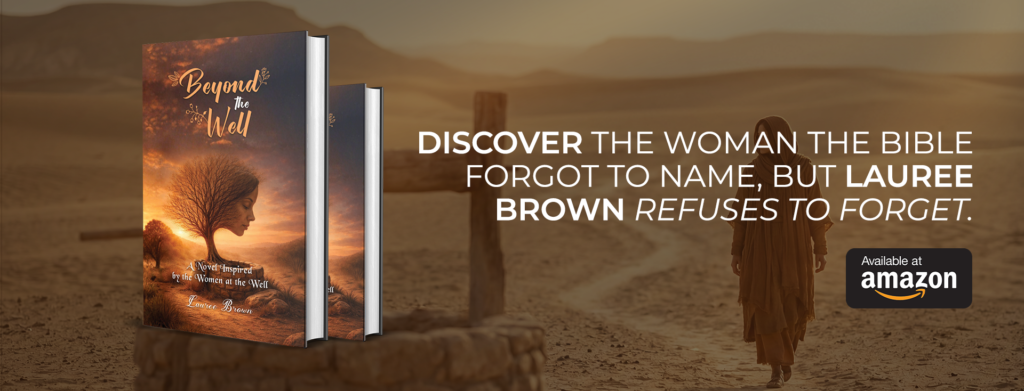
Mordecai himself is a study in that truth. His aggression is rooted in insecurity; it isn’t a sign of strength or manliness. He is shaped by a father who modeled dominance as identity, shaped by a culture that told him a woman’s body was a commodity, shaped by a fear that he was never enough unless he controlled something—or someone. His violence throughout the book isn’t creative villainy. It’s weak and hollow masculinity that cannot survive on its own. Its violence and oppression were what gave it a form, and without them, it dies out of desperation. The emptiness destroys him. His downfall isn’t of valor—it’s misogyny rotting away and eventually dying without ever having an identity of its own.
That’s why the responsibility to readers matters so much. When you write harm, you’re holding something that echoes real women’s stories. Many readers, myself included, have lived pieces of what Photine lived. Many still do. They deserve truth, but they also deserve care – a story that doesn’t traumatize them all over again, a story that honors dignity, emotional healing, and love and sacrifice.
In the end, writing violence against women isn’t to show the graphic side of it, but to truly and honestly portray the impact of it, and walk the path of empowerment through adversity. That’s where the real story lives.
That’s where readers find meaning. And that’s why Photine’s journey matters. Not because of what was done to her, but because of how she keeps rising despite it.
If you’ve read Beyond the Well, you already know those chapters transform her, not break her. And if you haven’t, I’ll just say this: Photine’s story holds more strength, more defiance, and more resurrection than the violence ever could. There is more to come.
Recent Blogs



Popular Blogs
Dr. Lauree Brown
A historical fiction author who brings to light women’s resilience and faith through powerful and impactful storytelling.