How to Write Women in Ancient Worlds Without Modernizing Them
How to Write Women in Ancient Worlds Without Modernizing Them
Your medieval heroine shouldn’t sound like she has a therapist.
Historical fiction comes with its own kind of challenges. One of the most prominent challenges is writing ancient characters and not making them appear modern. It is not only the clothes and settings that need to be set in the right time, but also the mannerisms of the characters. You can’t have a character set in the Bronze Age talking about therapy or boundaries. It just doesn’t fit the cultural and religious context.
That’s where the real trouble begins – when you want your character to think ‘modern’ while keeping her in the ancient times. Most of the time, writers do this unintentionally. Often, the intent behind it, I believe, is to portray a character with a strong inner life, but suddenly the character starts sounding like someone living in New York in 2025.
We need to understand the historical perspectives on women. Ancient women also had their ambitions, wants, needs, dreams, and thoughts – but they weren’t expressing any of them. They didn’t have the psychological frameworks, social freedoms, or cultural assumptions we do. They wouldn’t talk about self-worth or personal identity. For them, they understood honor, shame, survival, clan, god, and community were more easily acceptable concepts than identity, self-worth, and emotional healing. So, your ancient heroine needs to think similarly.
One of the best ways to avoid accidentally modernizing your characters is to think about agency differently. Modern agency looks like autonomy: choosing your own path, speaking your truth loudly, defying systems, breaking molds. But in most ancient cultures, especially patriarchal ones, women’s power didn’t show up in open confrontation or individual rebellion. It showed up in strategy. In timing. In social intelligence. In managing relationships. In managing scarcity. In knowing exactly when to speak and when to stay silent. Any ancient heroine doesn’t have to publicly announce her rebellion; she only needs tact and skill to navigate her way out. That would be empowerment through adversity of those times.
When you start writing women this way, something shifts. Their power feels real, not artificially inserted. Instead of giving them modern freedoms they never had, you give them the ability to move the world from inside its constraints. That’s how someone like Hagar survives. It’s how Tamar changes history. It’s how Photine becomes a catalyst in Beyond the Well—not by having modern independence, but by learning to work within (and sometimes cleverly around) the structures that try to define her.
If you want to build an authentic voice for ancient women, research becomes your best friend. Not the stiff academic kind—though there’s a place for that—but the kind that pulls you into the lived reality of the time. Read primary sources when you can. Read anthropology about how similar cultures work today. Look at how honor-based societies conceive of status, speech, shame, and resilience. And pay attention to how people navigate danger or oppression without using modern psychological language. You’re not trying to mimic the literal speech patterns of the ancient world—your readers would revolt—but you are trying to match the worldview behind the words.
As writers, we need to play with tact. The women of the Bronze Age felt jealousy, hope, love, anger, and grief just like any other woman would. The struggles of Biblical figures are relatable; however, what language we use to describe those emotions for ancient women makes all the difference. Emotions are universal and timeless, but the perspective needs to be set in a particular time. This is where writing shines, in the tension between what is timeless in us and what is shaped by the worlds we’re born into.
Photine is the perfect example of how this works. When she secures her fourth marriage with Barshai, nothing about it is modern or inspirational. She doesn’t think in terms of empowerment or boundaries. She thinks the way a first-century woman actually would, safety comes through attachment, travel requires a man’s name, and survival often depends on being claimed by someone with resources.
Her emotions are universal — anger, desperation, disgust, grief, determination. Any woman today could recognize those. But the way she acts on them is shaped entirely by her world. She studies Barshai, not to manipulate him but to know his weak spots – and that in a way, made her hold some power over him. When she lingers too close to him, she isn’t finding something meaningful there; rather, it’s her attempt at staying alive.
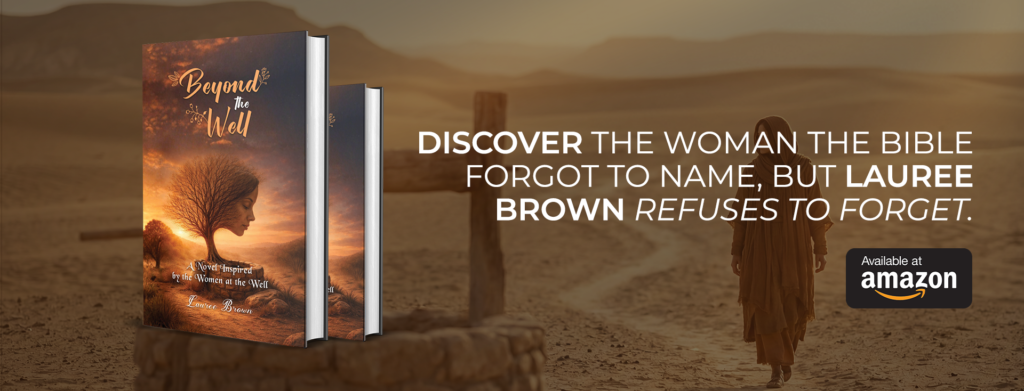
A modern Photine might talk about autonomy or emotional healing. The real Photine calculates survival in the currency available to her; usefulness, care, attentiveness, and the illusion of devotion. It’s not pretty, but it’s historically honest. Her strategy feels manipulative because it is — but it’s the kind of manipulation women in dangerous systems had to use to carve out slivers of control.
And that’s the point. The emotions are timeless, but the worldview is ancient. Photine doesn’t break character by sounding like us. She survives by thinking like a woman of her time — making the choices she actually had, not the ones we wish she did.
In the end, that’s the real craft challenge: letting ancient women be fully human without dragging them into a modern mindset. Photine isn’t relatable because she sounds like us, she’s relatable because she feels like us while navigating a world we’ve never lived in. And when writers honor that tension, the story gains a kind of honesty that no amount of modern “fixing” can improve. That’s how you write ancient women who breathe.
Recent Blogs



Popular Blogs
Dr. Lauree Brown
A historical fiction author who brings to light women’s resilience and faith through powerful and impactful storytelling.