When Historical Record Is Silent: The Ethics of Imagination

When Historical Record Is Silent: The Ethics of Imagination When Historical Record Is Silent: The Ethics of Imagination We don’t know what she said. But we can guess what she felt. One of the strangest parts of writing historical perspectives on women is realizing how often the record goes quiet. Their lineage, their husband, and the families they belonged to are well-recorded, but almost nothing is preserved about their emotions, thoughts, and dreams. It is almost like their voices didn’t matter as much as their lineage. So what do we do with that as writers? We can’t resurrect what was never written. But we can look into the silence and ask: What is responsible to imagine here? What is grounded in historical and religious context? And what crosses a line into projecting our own worldview onto a woman who lived in different cultural boundaries? That’s where the ethics of imagination come in. When the record is silent, the temptation is to fill the space with whatever feels empowering or emotionally satisfying. But responsible speculation works differently. You anchor yourself in the culture, the time period, the social norms, the belief systems, the economic constraints — many of which supported the exploitation of women – and then you ask, “Within these boundaries, what might a woman like her have felt?” You’re not trying to write wish fulfillment. You’re trying to write truth that could plausibly have lived beneath the surface of her world. The line is usually crossed the moment a character starts sounding like she just came out of therapy, a TED Talk, or a feminist theory class. That’s not imagination — that’s intervention. It’s you stepping into her story with your own values instead of hers. And while that might be a good idea but it erases the complexity of the world she existed in. This is why our stories must be read by people who have mastery over history and theology. People who can correct us on how that particular character must have talked, desired, expressed, or moved in the community. It’s about grounding your imagination in something solid enough that the story rings true. But at the end of the day, you’re still a storyteller. You’re going to have to make choices the record cannot confirm or deny. That’s the creative freedom side of the equation — the part where you picture the moment the scribe didn’t see, the conversation no one wrote down, the private feeling that never made it into the annals. The key is doing it with humility and strength instead of projection, with respect instead of revisionism. Because even when we don’t know what she said, we can still make an educated guess about what she felt — not with modern hindsight, but with historical imagination. And that is where some of the most powerful writing comes from: the space where evidence ends, empathy begins, and imagination steps carefully into the silence without trying to overwrite the truth that’s already there. A good example from Beyond the Well is Photine’s private emotional world around Ezra and her son. The Bible doesn’t elaborate on Photine’s life at length. Nowhere in the Scripture are we told about her pain, loss, or her experiences. In Scripture, her story appears in a few verses. She speaks briefly to Jesus. We’re given the outline of her life, not the texture like many other Biblical women. That silence gives a writer room to explore — but it also comes with responsibility. Take the moment Photine reflects on losing Ezra and their child. There is no record of how Biblical women processed the loss of a spouse or child. But there are certain records of lamentation, silence, ritual, and communal mourning as the way of grieving a loss. We know how honor and shame shaped identity. We know survival for women depended on households, alliances, and male protection. We know attachment was real, even if it was rarely written about from a woman’s perspective. So when Photine presses an olive shard into her palm until it hurts — that’s imagination grounded in anthropology. When she lashes out about safety and cages, that’s speculation shaped by cultural reality rather than modern emotional healing. And when she thinks of Ezra with longing and fury mixed together, that’s a universal emotion expressed through ancient logic; she doesn’t frame it as “unfinished grief” or “abandonment trauma”; she frames it as the collapse of the household she built and the threat it poses to her survival. Nothing about that moment contradicts history, and nothing imposes a modern mindset onto her. It fills in the silence with human truth rather than modern ideology. Ethical imagination always asks, Given what we know about her world, what might she reasonably have felt? What might she have done? How would she have interpreted it? And what would she never have said or believed because her culture didn’t offer those concepts? Photine’s grief is a perfect example of answering those questions with both freedom and resilience in faith. It’s your imagination working inside the boundaries of her world — not overwriting it. That’s the sweet spot. And that’s really the heart of it, writing into the silence without pretending it’s a blank page. Photine’s story works because you let her feel deeply while still letting her think like a woman shaped by her time, her cultural boundaries, and her limited options. You didn’t modernize her, but you didn’t flatten her either. That balance — empathy rooted in research, imagination tethered to what’s historically plausible — is what turns biblical values into a fully human life. It’s also what makes historical fiction feel honest. Not because we know exactly what happened, but because the world the character moves through feels true enough that we trust her emotions, even when the record doesn’t tell us a word of them. Buy Now Recent Blogs 12 Feb 2026 Uncategorized Hagar: The First Person to Name God 12 Feb 2026 Uncategorized Some things
From the Author: The Woman Who Would Not Stay Silent
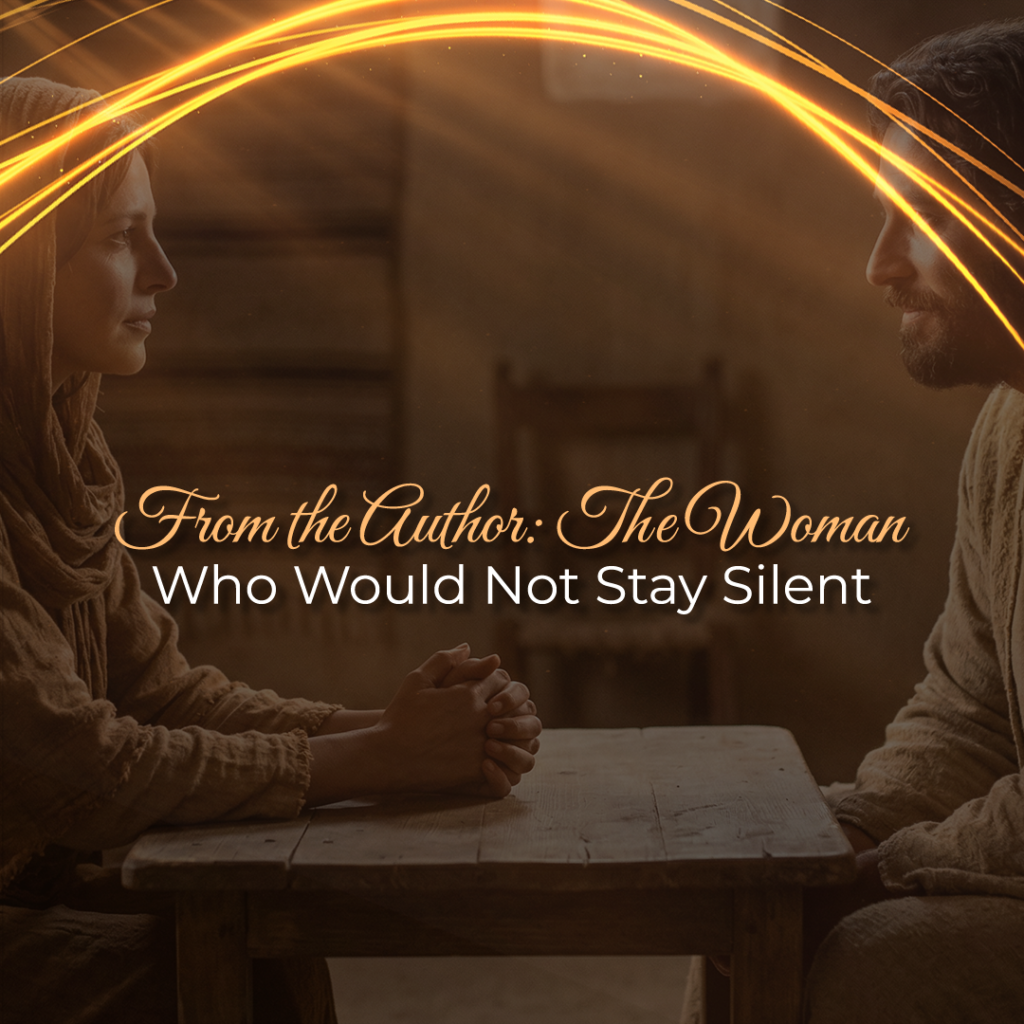
From the Author: The Woman Who Would Not Stay Silent From the Author: The Woman Who Would Not Stay Silent I’m not sure if it was Photine or me, perhaps both of us, who needed our stories to be told, seen, and heard. I was first introduced to Photine by my fiancé when we just started dating. He was a gentle, devoted, and faithful man. He spent most of his life around service, education, and ministry. He was a faithful husband and father for over 25 years. His life, though not without trials, had been steady and devoted to the church. However, my life has been a lot different than his.I was raised by a terminally ill mother and a recovering alcoholic father. I remember my early years as attempts to survive the day, every day. I grew up familiar with neglect, abuse, hardships, and quiet resilience in faith. We met, slowly grew close, and started dating within a year. Things were going well, and I knew for sure I was falling for him. I remember the day clearly when I decided to tell him the truth – the whole, entire truth. We met at a pub we had visited before. Looking at his warm and kind face, I emotionally and mentally prepared myself to say goodbye. I didn’t want things to go far – I didn’t want to hurt this kind gentleman. I took a deep breath and said, “This has been wonderful, but before we go any further, I need to tell you who I really am.” He looked puzzled. “Okay,” he said simply and calmly. Holding back my tears, I looked down at my hands and rushed to speak.“You’re a great man, but we’ve lived such different lives. You’ve loved once, married once, and raised beautiful children. You went to college right after high school—like people are supposed to. I’ve done everything upside down. I’m just now going to college. I’ve been married and divorced four times… I’m not like you. I guess I’m just… broken.” Silence.Should I look up or just leave? How do I know what he thinks? I looked up. I am now glad I looked up.His gentle, loving eyes didn’t have judgment or a frown. Not even a trace of any disapproval. I realized then that he truly saw me. Then he said the words that changed my life:“So what I’m hearing is… you’re like the Samaritan woman.” At the time, I wasn’t entirely sure what he meant. But he went on:“You have loved. You have lost. And all of it made you who you are.” In that moment, shame lost its grip on me. From then on, the Samaritan woman, Photine’s story became mine – and I decided to truly tell her story to the world. That’s how Beyond the Well was born. But she wasn’t the only one. Soon, other Biblical women surfaced with their silent voices, unbreakable faith and perseverance, stories, and an urge to be heard. So I listened.And I wrote. In the months ahead, I’ll be sharing these stories—these Obscure Women of the Bible—who, in their quiet courage, have something powerful to say to us today. Stay tuned, and thank you for walking this journey with me. Buy Now Recent Blogs 12 Feb 2026 Uncategorized Hagar: The First Person to Name God 12 Feb 2026 Uncategorized Some things need to be said. Not everything needs to be shown. 12 Feb 2026 Uncategorized The Messiah came out to a woman. The church has been uncomfortable ever since. Popular Blogs 01 Feb 2026 Uncategorized What if the scandal wasn’t her fault? 06 Feb 2026 Uncategorized Tamar: The Prostitute Who Saved the Messianic Line 12 Feb 2026 Uncategorized The Messiah came out to a woman. The church has been uncomfortable ever since.
Mary Magdalene: From Seven Demons to First Witness
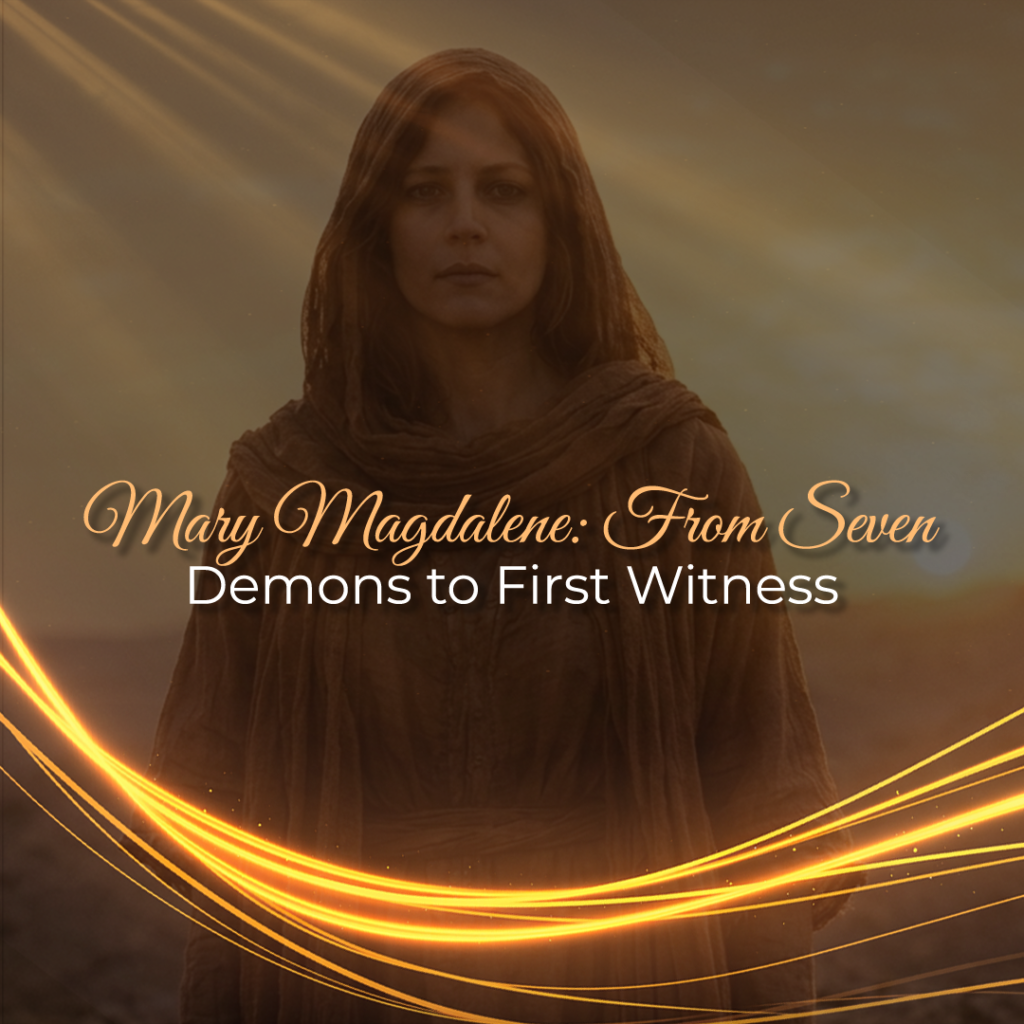
Mary Magdalene: From Seven Demons to First Witness Mary Magdalene: From Seven Demons to First Witness They tried to make her a prostitute. She was an apostle. If you grew up in church, you probably heard a version of Mary Magdalene that went something like this: she was immoral, unstable, “fallen,” or carrying some kind of secret shame. The problem? None of that is in the Bible. Not once. Not even hinted at. She was the first witness of resurrection, the first person Jesus trusted, yet she is among the Biblical women whose story is minimized and smeared. Today, more people are asking: Who was Mary Magdalene really? And what does her story actually reveal? This is where reclaiming her begins. Mary Magdalene appears in all four gospels as a devoted follower of Jesus. She funds His ministry. She stands with Him at the cross when almost everyone else runs. And in that early morning, she witnessed the risen Christ – a moment of God’s intervention that only a few witness. So where did the smear campaign come from? In 591 AD, Pope Gregory the Great’s sermon caused the devotees to assume three different women as one, and the rumor stayed for a thousand years. Mary Magdalene became a moral warning and was never honored as a spiritual leader. But Mary stands right where she always has, changing the historical perspective on women—no smearing could remove her from the story. Both Luke and Mark mention that Jesus cast “seven demons” out of her. But notice something:they never say those demons were connected to sin or immorality. In the ancient world, “demons” could refer to: And the number seven symbolized fullness or completeness. In other words, Mary was deeply afflicted—but not morally condemned. She wasn’t freed from shame.She was freed from suffering. It’s a story of emotional healing, not humiliation. In the Gospel of Mary, Mary tells that the souls move past seven powers—darkness, craving, ignorance, fear, and distorted wisdom. These aren’t demons that possess from the outside; they are illusions that bind from within. And interestingly, these “powers” parallel spiritual maps from Eastern traditions—like the seven chakras, which describe obstacles in the human energy system connected to survival, desire, ego, compassion, truth, vision, and union. Different traditions, different languages—same journey:Personal growth through faith. Mary Magdalene wasn’t just healed—she became essential. When Jesus rose from the dead, He first appeared to her. He spoke her name.He entrusted her with the message.He sent her to the men with the words that changed everything. Early Christians called her apostola apostolorum—“The apostle to the Apostles.” In the first century, due to cultural boundaries women were considered as unreliable witnesses in court. Their testimony wasn’t even legally valid. If the gospel writers had wanted to invent a convincing resurrection narrative, the last people they would choose to be first on the scene were women. But the gospels aren’t written to please institutional authority. They’re written to tell the truth. Women were first at the tomb because women stayed.Because women didn’t flee the cross.Because the ones dismissed by society were the ones Jesus trusted most. Mary Magdalene becomes the hinge between death and new life—between the end of a story and the beginning of hope – embodiment of faith and perseverance. Mary Magdalene’s story reshaped history. In John 4, one of the Biblical women, Photine becomes the first missionary to the Samaritans. She meets Jesus at the well, drops her jar, runs into the village, and announces the arrival of Jesus. Two women.Two different regions.Two stories overshadowed and distorted for centuries. Yet both entrusted with revelation.Both chosen as messengers.Both remembered in early Christian tradition as leaders. Women were not on the edges of Jesus’ ministry.They were its foundation. When we reclaim Mary Magdalene from the labels that never belonged to her, we reclaim something bigger: Mary Magdalene’s story is a map of courage and awakening. She moved through her own shadows and stood fully present in her calling. She was not a cautionary tale.She was a witness, a teacher, and a spiritual force. And perhaps the most faithful response we can offer her today is this: Call her what she was.Believe her story.And rise in the same way she did. Mary Magdalene appears as a mentor, a mirror, and a spiritual companion in Photine’s story. Her presence guides Photine toward her own emotional healing, courage, and redemption and forgiveness. If you want to see how their stories intertwine, you’ll find her woven into the heart of the journey. Buy Now Recent Blogs 12 Feb 2026 Uncategorized Hagar: The First Person to Name God 12 Feb 2026 Uncategorized Some things need to be said. Not everything needs to be shown. 12 Feb 2026 Uncategorized The Messiah came out to a woman. The church has been uncomfortable ever since. Popular Blogs 01 Feb 2026 Uncategorized What if the scandal wasn’t her fault? 06 Feb 2026 Uncategorized Tamar: The Prostitute Who Saved the Messianic Line 12 Feb 2026 Uncategorized The Messiah came out to a woman. The church has been uncomfortable ever since.
For 2,000 years, she’s been “the woman at the well.” But what if she had a name all along?
For 2,000 years, she’s been ‘the woman at the well.’ But what if she had a name all along? For 2,000 years, she’s been ‘the woman at the well.’ But what if she had a name all along? If you’ve spent any time in church, you know her only as “the Samaritan woman” or perhaps “the woman at the well”. Both are a title, not a name. A role, not a person. That’s how the Western tradition has treated her for most of Christian history — important enough to preach about, but not important enough to know. The West didn’t lend her any name, but the Eastern Christian tradition called her Photine. Photine means “the Luminous One.”The one who carries light.The one who receives it, reflects it, and passes it on. That name didn’t come from a desire to romanticize her. It came from how the early Eastern church actually viewed her — not as a scandal, but as someone transformed. Someone who saw Jesus clearly and immediately told others. Someone whose spiritual journey changed an entire village. When Eastern hagiographic texts tell her story, they don’t shame her. They elevate her. Photine becomes a preacher, an evangelist, and eventually one of the Biblical women who stands before Nero himself. In those stories, she isn’t weak, immoral, or embarrassed. She’s bold, articulate, steady, and completely unafraid.When you give someone a name, you give them back their humanity. Yet, Western Christianity left her unnamed, and someone without a name becomes whatever the preacher says they are. Eastern Christianity did the opposite — they remembered her. They gave her a name that matched her impact. They recorded traditions about her life, her ministry, her courage, her faith and perseverance, and her death. Two traditions looking at the same story.One leaves her faceless.The other calls her “Luminous.” It matters. The Urantia Book – which isn’t considered historical by Christians, but it has Christian narratives in imaginative details – also expands on her story. However, it names her Nalda, not Photine. She is known as “the Woman of Sychar.” When writing Beyond the Well, I had to decide who she was before she stood at Jacob’s well. That meant she needed more than a label.She needed a life.She needed a story.She needed a name that held meaning. I chose Photine because it captures everything the Gospel doesn’t say but the tradition remembers: Photine is not a name about shame — it’s a name about witness. If you’ve spent any time in church, you know her only as “the Samaritan woman” or perhaps “the woman at the well”. Both are a title, not a name. A role, not a person. That’s how the Western tradition has treated her for most of Christian history — important enough to preach about, but not important enough to know. The West didn’t lend her any name, but the Eastern Christian tradition called her Photine. Photine means “the Luminous One.”The one who carries light.The one who receives it, reflects it, and passes it on. That name didn’t come from a desire to romanticize her. It came from how the early Eastern church actually viewed her — not as a scandal, but as someone transformed. Someone who saw Jesus clearly and immediately told others. Someone whose spiritual journey changed an entire village. When Eastern hagiographic texts tell her story, they don’t shame her. They elevate her. Photine becomes a preacher, an evangelist, and eventually one of the Biblical women who stands before Nero himself. In those stories, she isn’t weak, immoral, or embarrassed. She’s bold, articulate, steady, and completely unafraid.When you give someone a name, you give them back their humanity. Yet, Western Christianity left her unnamed, and someone without a name becomes whatever the preacher says they are. Eastern Christianity did the opposite — they remembered her. They gave her a name that matched her impact. They recorded traditions about her life, her ministry, her courage, her faith and perseverance, and her death. Two traditions looking at the same story.One leaves her faceless.The other calls her “Luminous.” It matters. The Urantia Book – which isn’t considered historical by Christians, but it has Christian narratives in imaginative details – also expands on her story. However, it names her Nalda, not Photine. She is known as “the Woman of Sychar.” When writing Beyond the Well, I had to decide who she was before she stood at Jacob’s well. That meant she needed more than a label.She needed a life.She needed a story.She needed a name that held meaning. I chose Photine because it captures everything the Gospel doesn’t say but the tradition remembers: Photine is not a name about shame — it’s a name about witness. Buy Now Recent Blogs 12 Feb 2026 Uncategorized Hagar: The First Person to Name God 12 Feb 2026 Uncategorized Some things need to be said. Not everything needs to be shown. 12 Feb 2026 Uncategorized The Messiah came out to a woman. The church has been uncomfortable ever since. Popular Blogs 01 Feb 2026 Uncategorized What if the scandal wasn’t her fault? 06 Feb 2026 Uncategorized Tamar: The Prostitute Who Saved the Messianic Line 12 Feb 2026 Uncategorized The Messiah came out to a woman. The church has been uncomfortable ever since.
What if the scandal wasn’t her fault?
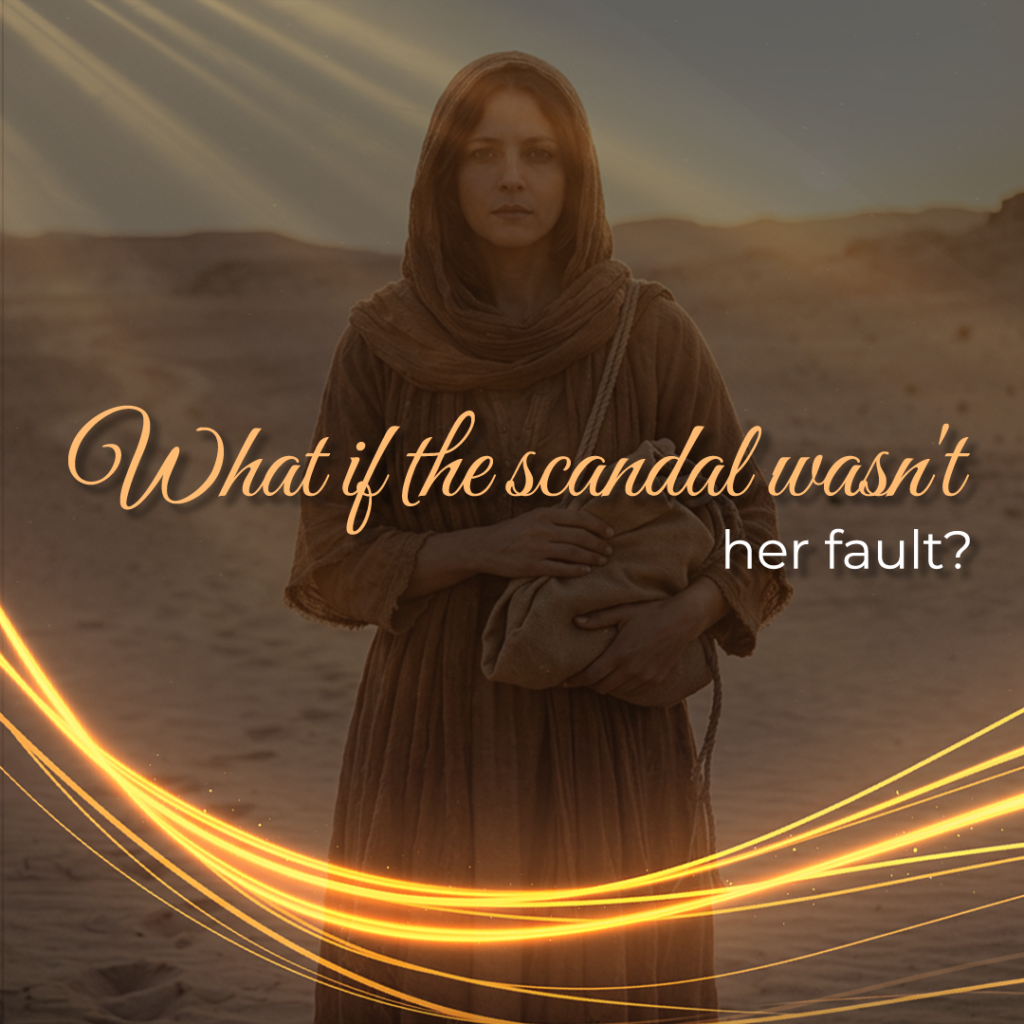
What if the scandal wasn’t her fault? What if the scandal wasn’t her fault? For centuries, the Samaritan woman at the well has been flattened into a character sketch so thin it barely holds shape: a sinner. A seductress. A woman with a past.And why?Because she had “five husbands.” But that interpretation crumbles the moment we step out of our modern assumptions and into the dust and tension of 1st-century Samaria, a world where marriage was a survival strategy, not a romantic choice; where divorce was a male privilege, not a mutual decision; where a woman’s entire livelihood depended on the households she was passed between, inherited into, or abandoned by. Jesus wasn’t naming her immorality.He was naming her story—a story carved by loss, law, tragedy, and a fierce resilience in faith. In her world, a woman might marry again and again simply because of cultural boundaries. A brother had to marry his dead brother’s widow. A man could dismiss his wife without cause. Disease was common, labor was dangerous, and Rome’s shadow left no one untouched. Five husbands didn’t make her wayward. It only made her a survivor, a widow, an exile, a victim, and a burden-bearer navigating the exploitation of women. Even the man she lived with was not a lover. More likely, he was a shelter—imperfect, temporary, perhaps reluctant, but shelter nonetheless. Women without male relatives often lived at the mercy of another household. So when she had the spiritual encounter with Jesus at the well, He didn’t mention her sins.He was calling out her truth—and recognizing the weight she carried. But here is where the story gets interesting. Later Christian tradition—the stories the early Church told about her—does the exact opposite of our modern sermons. They don’t shame her. They magnify her. These stories do not come from the impulse to condemn her.They come from the instinct to honor her—to amplify what Jesus saw, not what people projected. They describe her converting entire cities, teaching her sons to carry the gospel, and standing before Nero with a boldness that unsettled his throne. No hesitancy. No shame. No shrinking. In one of the most striking versions of her story, Nero, furious that she has converted even members of his household, attempts to break her through torture. But Photine does not break. She sings. She blesses the guards who beat her. She preaches to the prisoners. She tells Nero himself that he will answer to God. She becomes the example of female empowerment in Scripture. So Nero chooses a punishment meant to mock the very place her story began. He orders her to be thrown into a dry well. A deliberate echo. A cruel reversal. But Photine turns even this into a sanctuary. She blesses the very men who lower her down.She prays.And she dies as she lived: defiant, luminous, unafraid. The well becomes her symbol—her beginning and her end.Where she once met the man who saw her… she now meets the God she preached. And somewhere along the way, across centuries and interpretations, we lost that version of her—the woman whose depth and courage inspired generations of believers, not accusations. We replaced her story with suspicion.We traded her resilience for scandal.We let the loudest male interpreters shrink her into a stereotype. But the text itself never calls her immoral.Jesus never invites her to repent.He never shames her. Instead, He has with her the longest recorded theological conversation in the entire Gospel record.He entrusts her with revelation.He sends her back to her village with dignity and authority. He treats her as an equal.A disciple.A herald of truth. The scandal never rested on her shoulders.The scandal was that Jesus chose her—a Samaritan woman with a complicated history—to be the first voice declaring His identity to a people who were told they didn’t matter. Her five husbands didn’t disqualify her.They made her a witness forged in fire. She wasn’t immoral.She was astonishingly alive in a world determined to break her. And maybe it’s time we let her be who she really is. Maybe it’s time we reclaim her humility and strength, her story, her courage, and her redemption and forgiveness. Because the woman at the well was never just a sinner saved.She was a survivor seen—And a prophet unleashed. If you want to read the story she was never given —The story her world never allowed her to tell —The story of the girl who became the woman Jesus chose… The story of a child whose father disappeared, leaving questions that carved themselves into her bones.The story of a sister carrying the failures and grief of a family unraveling under Roman rule. The story of a wife handed from household to household by laws she could not refuse.The story of a young woman who buried more than one husband and kept walking anyway. The story of a survivor grounded in humility and strength. The story of a woman who found resilience in faith. The story of the girl who experienced empowerment through adversity. If you want to know her —not the caricature, not the sermon illustration, but the soul —That story is waiting in Beyond the Well. The novel steps into the life behind the spiritual encounters.It gives voice to the shadows no one asked her about.It reveals the resilience that tradition later remembered, but Scripture only hints at.It shows how a girl shaped by grief, injustice, tenderness, and fire becomes the woman who stands at Jacob’s well and dares to question a stranger who speaks as if He knows her. The story Jesus honored.The story that early Christians amplified into legend.The story we were never meant to lose. That story lives in Beyond the Well. Buy Now Recent Blogs 12 Feb 2026 Uncategorized Hagar: The First Person to Name God 12 Feb 2026 Uncategorized Some things need to be said. Not everything needs to be shown. 12 Feb 2026 Uncategorized The Messiah came out to a woman. The church has been uncomfortable ever since. Popular Blogs 01 Feb