Hagar: The First Person to Name God
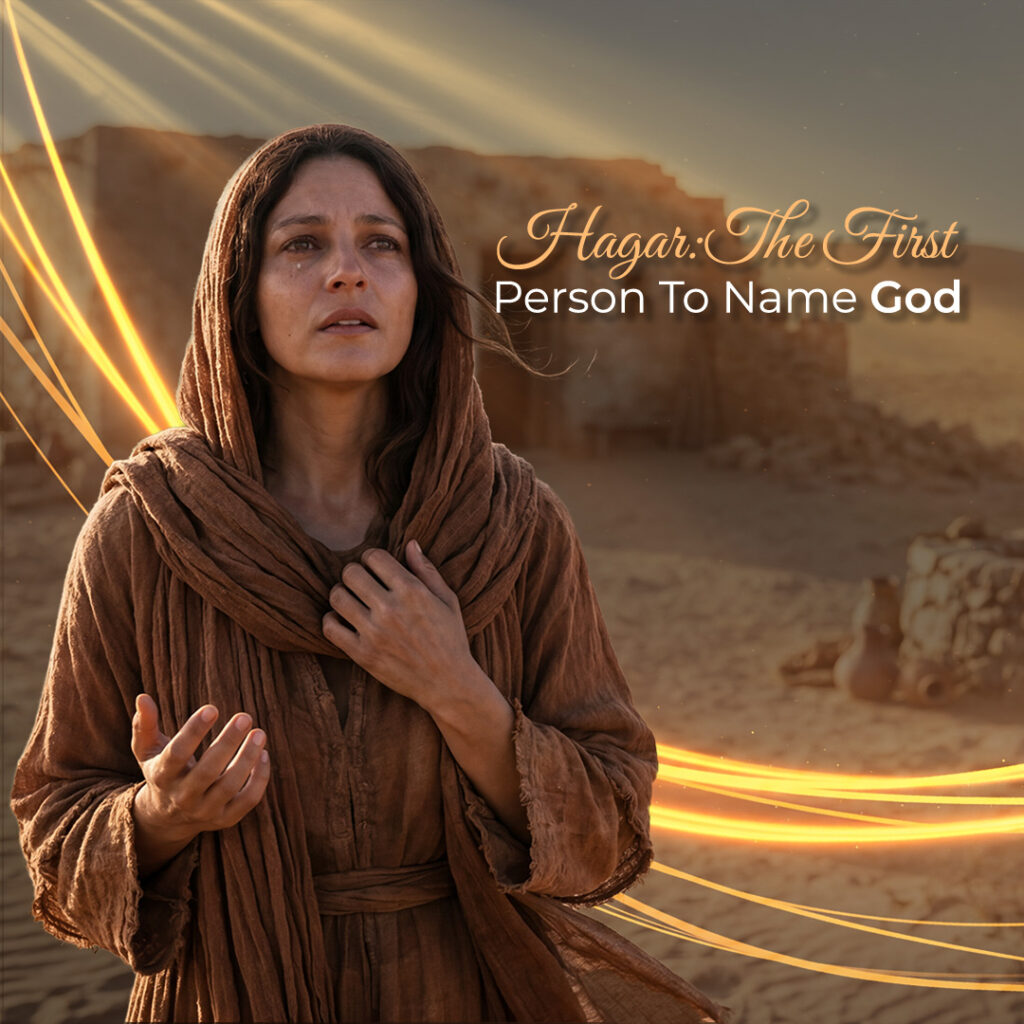
Hagar: The First Person to Name God Hagar: The First Person to Name God She saw God see her. Everything changed. Not many want to say her name, let alone her story. Where most stories are told and retold by many, Hagar’s story is whispered only among a few. She wasn’t a prophet or a matriarch, but Hagar’s story didn’t receive the fairness or dignity it deserved. Her story is mentioned in Genesis 16 as Abraham’s slave. Even though she is among the Biblical women, Hagar’s story is told because someone else owns her. Hagar’s story is of surrogacy in the Bible. Hagar became a surrogate when Sarah couldn’t conceive, but the story doesn’t say if Hagar negotiated, consented, or if she was asked about this. But as soon as she became pregnant, things changed drastically for Hagar. Sarah started resenting her, Abraham sided with Sarah, and Hagar became the easiest person to blame. So, the best option for her was to leave. So, she ran. Pregnant, exhausted, terrified, Hagar went into the desert. Alone and tired, she rested at a spring, where something extraordinary happened – God’s intervention happened. Scripture says “the angel of the Lord found her,” and that phrase matters. Up until this point, God has spoken to men, patriarchs, and leaders. But here, God seeks out a woman who has been pushed out of her home and discarded. The conversation between God and Hagar is simple, direct, and shockingly personal. He doesn’t dismiss her experience. He doesn’t tell her to toughen up or pretend her suffering doesn’t matter. He acknowledges her. He tells her she’s carrying a son. He makes promises about her future. He treats her as someone whose life actually has value. In this very moment, Hagar names her God – something that even prophets haven’t done before. She says, “You’re El Roi,” which translates to the God who sees me. It wasn’t a revelation or some prophetic feat; Hagar named her God as the only one watching over her, looking after her, truly seeing her, when everyone else deliberately turned away from her. When all the seeing eyes turned blind, the All-seeing God saw everything. Hagar’s story is crucial as her naming of God becomes a part of the Scripture and teaches us Biblical values of faith and perseverance. Hagar’s story challenges the assumption that God works only through the powerful or the chosen. God is looking after and seeking the unseen, unheard, and discarded people, too. It also helps us understand overcoming oppression with faith better, because spiritual encounters occur not when you’re safe, they happen when you find yourself most helpless and troubled. This is exactly why Hagar’s story helps us understand Photine in Beyond the Well. Like many others, Photine is also the woman who stands alone in her crisis and is misunderstood by her community. She is forced to carry the shame that isn’t hers, and her struggles go unheard and unnoticed. Photine, similar to Hagar’s story, also encountered God at a place where she went to seek relief from her pain. The place wasn’t some place of honor or a well-kept sanctuary – it was a well. At the well, when Jesus met Photine, He saw her in the same way God had found Hagar. He doesn’t condemn her, only acknowledges her past. He told her that her life also mattered the same way any other life matters. And most importantly, He offered her something no one else had before – clarity, dignity, and living water. Hagar’s story matters for us too. Hagar showed us that God does not prefer the most notable over the unseen woman. He meets them where they are and offers them what they couldn’t imagine on their own. Buy Now Recent Blogs 12 Feb 2026 Uncategorized Hagar: The First Person to Name God 12 Feb 2026 Uncategorized Some things need to be said. Not everything needs to be shown. 12 Feb 2026 Uncategorized The Messiah came out to a woman. The church has been uncomfortable ever since. Popular Blogs 01 Feb 2026 Uncategorized What if the scandal wasn’t her fault? 06 Feb 2026 Uncategorized Tamar: The Prostitute Who Saved the Messianic Line 12 Feb 2026 Uncategorized The Messiah came out to a woman. The church has been uncomfortable ever since.
Some things need to be said. Not everything needs to be shown.
Some things need to be said. Not everything needs to be shown. Some things need to be said. Not everything needs to be shown. Not all stories come with contrasting pleasant and tragic parts – some are tales of pain and trauma in their entirety. Stories of women set in ancient times, especially Biblical women, often reflect the violence, trauma, oppression, and coercion that formed the societal norm. So the challenge as a writer isn’t whether to acknowledge that reality, but how. How do you honor the weight of what women endured while still caring for the reader who has to walk through those moments with you? That was the struggle I had to deal with while writing Beyond the Well, especially in the chapters involving Mordecai. His violence toward Photine isn’t sensational, and it isn’t included for shock value. It’s included because it reflects the world women lived in—gender, ownership, dominance, and fear braided tightly together within the cultural boundaries. But even when the story required acknowledging what he did, I didn’t want to drag the reader into graphic detail. I didn’t want to write scenes that centered on his brutality. Instead, I turned the attention on the one suffering—the moment Photine’s breath caught, the way her mind pulled away from her body, the flicker of shame that wasn’t hers to carry. The story is told from her perspective, honoring humility and strength, without lending too much attention to his doings. For me, that distinction matters. Violence against women has been exploited in storytelling far too often. It’s become a shortcut for drama, a lazy way to give a villain “depth,” or, worse, an attempt to make suffering entertaining. I refuse to participate in that. Some things need to be said; hiding away from violence completely is also being disloyal to the story. But not everything needs to be shown. Sometimes the rawest truth focuses on emotional healing rather than physical ordeal. Mordecai himself is a study in that truth. His aggression is rooted in insecurity; it isn’t a sign of strength or manliness. He is shaped by a father who modeled dominance as identity, shaped by a culture that told him a woman’s body was a commodity, shaped by a fear that he was never enough unless he controlled something—or someone. His violence throughout the book isn’t creative villainy. It’s weak and hollow masculinity that cannot survive on its own. Its violence and oppression were what gave it a form, and without them, it dies out of desperation. The emptiness destroys him. His downfall isn’t of valor—it’s misogyny rotting away and eventually dying without ever having an identity of its own. That’s why the responsibility to readers matters so much. When you write harm, you’re holding something that echoes real women’s stories. Many readers, myself included, have lived pieces of what Photine lived. Many still do. They deserve truth, but they also deserve care – a story that doesn’t traumatize them all over again, a story that honors dignity, emotional healing, and love and sacrifice. In the end, writing violence against women isn’t to show the graphic side of it, but to truly and honestly portray the impact of it, and walk the path of empowerment through adversity. That’s where the real story lives. That’s where readers find meaning. And that’s why Photine’s journey matters. Not because of what was done to her, but because of how she keeps rising despite it. If you’ve read Beyond the Well, you already know those chapters transform her, not break her. And if you haven’t, I’ll just say this: Photine’s story holds more strength, more defiance, and more resurrection than the violence ever could. There is more to come. Buy Now Recent Blogs 12 Feb 2026 Uncategorized Hagar: The First Person to Name God 12 Feb 2026 Uncategorized Some things need to be said. Not everything needs to be shown. 12 Feb 2026 Uncategorized The Messiah came out to a woman. The church has been uncomfortable ever since. Popular Blogs 01 Feb 2026 Uncategorized What if the scandal wasn’t her fault? 06 Feb 2026 Uncategorized Tamar: The Prostitute Who Saved the Messianic Line 12 Feb 2026 Uncategorized The Messiah came out to a woman. The church has been uncomfortable ever since.
The Messiah came out to a woman. The church has been uncomfortable ever since.
The Messiah came out to a woman. The church has been uncomfortable ever since. The Messiah came out to a woman. The church has been uncomfortable ever since. There’s a reason the story of the Samaritan woman at the well still stays well-hidden, and churches don’t dare voice it. Long before the Twelve caught on, long before Jerusalem became the spiritual epicenter, long before the miracles gathered crowds—Jesus revealed His identity to her. It’s the truth, too disruptive and too destabilizing for the system. The first divine revelation was entrusted to a simple woman – a woman who had nothing but her water pot. Yes, it was a woman. Not Peter.Not John.Not a priest, not a scholar, not a religious insider.A woman.A Samaritan woman.A woman with a past.A woman whose very existence sat at the intersection of every “no” in Jewish society. This moment is a reminder of one of the most spiritual encounters and a testament to female empowerment in Scripture. John’s Gospel doesn’t hide this or soften it. He narrates it plainly. Jesus says to her, “I who speak to you am He” (John 4:26). Scholars across traditions—Jewish, Christian, feminist, and secular—have pointed out that this is the earliest recorded moment of unfiltered messianic self-disclosure in the New Testament. And who holds it? A woman whose name was never written down.A woman the earliest Christian writers later named Photine.A woman who preached the first sermon: “Come and see…”A woman whose testimony converted an entire Samaritan town. This is empowerment through adversity at its finest. No wonder the institutional church has squirmed for 2,000 years.It’s hard to build a patriarchal hierarchy when the first evangelist wasn’t a man. And when you look at the wider world of early Christian writing—apocrypha, Gnostic texts, Syriac traditions, and Eastern hagiography—the pattern becomes even more obvious. Women weren’t silent. Women weren’t secondary. Women were central bearers of revelation. The Gospel of Mary tells us the Magdalene understood Jesus best.The Dialogue of the Savior of Nag Hammadi Codex III, also represents women as spiritual interlocutors.The Gospel of Thomas clarifies that divinity isn’t defined by gender, as Jesus affirmed, and confirmed Biblical values.The Acts of Photine (a 4th–6th century hagiographic tradition) calls the Samaritan woman “equal to the apostles” and portrays her preaching boldly—even standing fearlessly before Nero. None of these traditions were embarrassed by women carrying theological authority.The discomfort came later—when the church aligned itself with the empire instead of Jesus’ example. And when we step back and look at the cultural and religious context, His choice becomes astonishingly radical. Jews avoided Samaritans. Men avoided solitary conversation with women in public. Holy men avoided anyone who threatened their ritual purity. Yet Jesus breaks every rule in one encounter—social, religious, gendered—and instead of offering a simple word of comfort or healing, He enters into one of the deepest theological conversations in all four Gospels. He speaks to her of living water.Of worship “in spirit and truth.”Of the nature of God beyond sacred mountains and temples.Of identity, shame, thirst, and longing. All of that… to a woman. This entirely reshapes the historical perspectives on women. Jesus does not treat women as interruptions, objects, threats, or temptations.He treats them as theologians.As witnesses.As apostles. And if we’re being honest, He often treats them as more ready than the men. Before the disciples understood who He was, she knew.Before the Twelve were sent out, she ran.Before Jerusalem heard a whisper, Samaria heard a proclamation carried on the voice of a woman who had been dismissed, avoided, gossiped about, and pushed aside her entire life. Some claim He revealed Himself to her because she was broken.Maybe it’s the opposite.Maybe He revealed Himself to her because she saw with her spirit first, not her status. Maybe He revealed Himself to her because women do not cling to power, so they do not distort it.Maybe because the feminine has always housed spiritual intuition, emotional intelligence, and the capacity to receive revelation without needing to weaponize it. Maybe because the story of the Messiah can only begin on the margins—where women have always been placed against their will, but where God has always found them. If you’ve read Beyond the Well, you already know how deeply I believe Photine’s voice was meant to rise. Her story didn’t end at Jacob’s Well. It didn’t end in John’s Gospel. It blossomed in oral tradition, in the memory of the early church, in Eastern Christian hagiography, and—quietly, persistently—in the lives of women who have always recognized themselves in her. Her story isn’t finished.And neither is the rise of the feminine she represents—then, or now. Buy Now Recent Blogs 12 Feb 2026 Uncategorized Hagar: The First Person to Name God 12 Feb 2026 Uncategorized Some things need to be said. Not everything needs to be shown. 12 Feb 2026 Uncategorized The Messiah came out to a woman. The church has been uncomfortable ever since. Popular Blogs 01 Feb 2026 Uncategorized What if the scandal wasn’t her fault? 06 Feb 2026 Uncategorized Tamar: The Prostitute Who Saved the Messianic Line 12 Feb 2026 Uncategorized The Messiah came out to a woman. The church has been uncomfortable ever since.
She was dead before she died. Until she wasn’t.
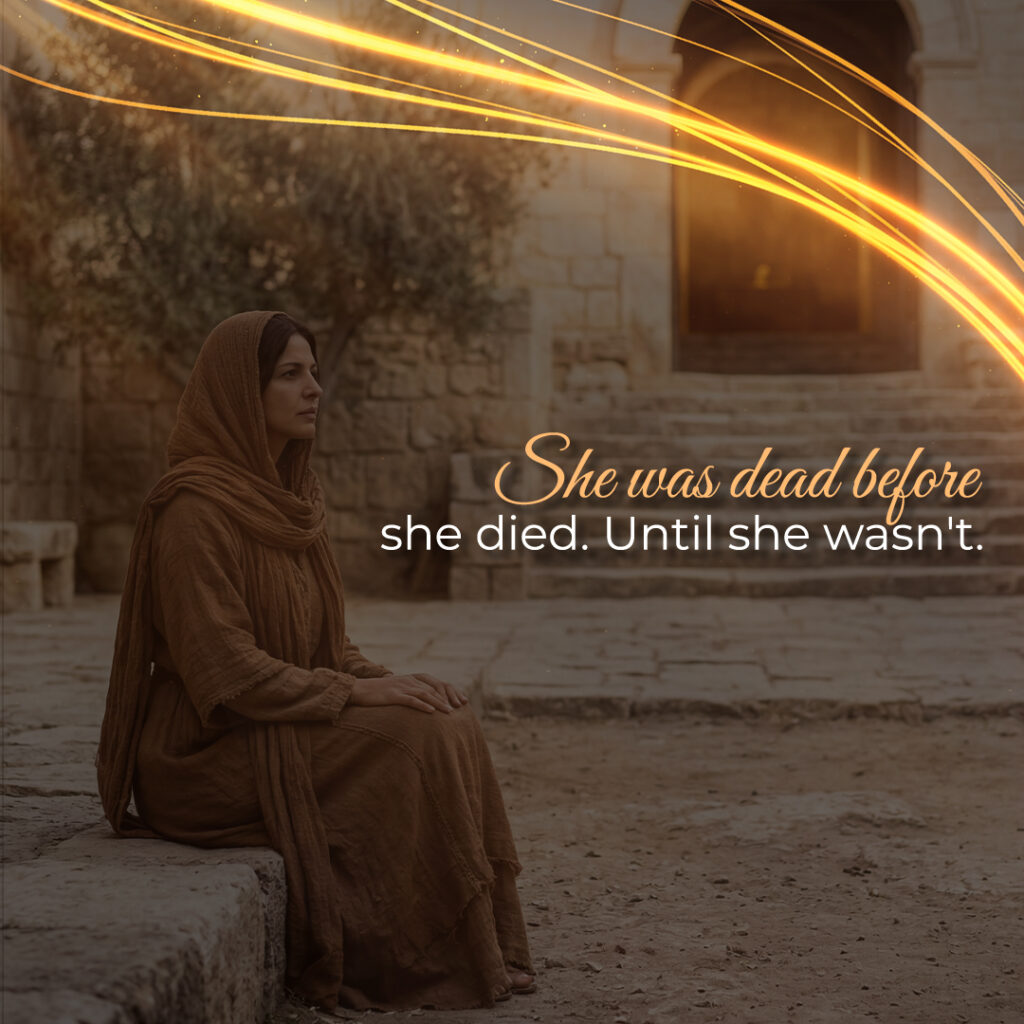
She was dead before she died. Until she wasn’t. She was dead before she died. Until she wasn’t. She appears in three of the Gospels — Matthew, Mark, and Luke — and though each writer tells the story in their own way, the portrait is unmistakably the same. Mark describes her most vividly: a woman who had been bleeding for twelve years, who had “spent all she had on physicians” yet only grew worse. Luke, himself a physician, adds that no doctor had been able to heal her. Matthew gives the briefest account, but even he makes sure we see the moment she reached out and touched the hem of Jesus’ garment. Across all three tellings, the picture is of the struggles of Biblical figures, of a woman who had run out of money, out of treatment, out of community, and nearly out of hope — someone living in a kind of slow, quiet death long before the miracle ever came. To understand her story, you have to understand her world and the cultural and religious context. Medical care in the ancient Mediterranean wasn’t just inconsistent — it was expensive. Ancient medical papyri describe elaborate ointments, strange potions, expensive tonics, and long lists of recommended treatments. Pliny the Elder outright complained about the cost of doctors, and Soranus, a physician writing about women’s health in the early 2nd century, documented treatments for uterine bleeding that were far from cheap. So when Mark says she “spent all she had on physicians,” that wasn’t exaggeration. That was economic reality. Every doctor she visited, every remedy she tried, every desperate hope she purchased slowly pushed her deeper into financial collapse. She didn’t just lose her health — she lost her livelihood, her savings, and probably any stability she once had. The physical suffering was only the beginning of it. According to Leviticus 15, a woman with chronic bleeding is in a constant state of ritual impurity – she was considered impure, and everything she touched became unclean. In fact, everyone who touched her became unclean. Imagine living with a condition that made people physically recoil, not because of who you were, but because of what your body was doing. Tikva Frymer-Kensky, a scholar of women in the ancient Near East, describes this kind of existence as “social death.” You are alive, but outside. Present, but not welcomed. Seen, but not embraced. Now add twelve years of that isolation. Twelve years without shared meals. Twelve years without a place in the synagogue. Twelve years without being able to touch or be touched. Twelve years of disappearing a little more each day. It’s heartbreaking to think about, but it’s also the reality the text points us toward. And then — after twelve years, after all the money is gone, after every doctor has failed her, after every door has quietly closed — she does something unthinkable. She reaches out and touches Jesus. She touches the tassel — the tzitzit — the woven fringe Jewish men wore on their garments to remind them of the commandments. Tzitzit was considered holy, only to be touched by the pure and righteous. She reached for the holiest part of His clothing. That’s where the story becomes a theological earthquake. According to the purity system, impurity spreads. If she touches Him, He becomes unclean. That’s how the world worked. That’s what everyone believed. Yet in this moment, the entire purity system collapses in reverse. Instead of her impurity moving outward, His healing moves outward. It’s as if the flow of power turns the other direction — away from stigma and toward restoration. Amy-Jill Levine, E.P. Sanders, and other scholars who have studied purity culture make it clear: this wasn’t just a quiet miracle tucked into a busy day. This was a challenge to an entire religious system. She wasn’t supposed to touch Him. She wasn’t supposed to be in a crowd. She wasn’t supposed to be anywhere near a holy person. Yet she reached out anyway. And he didn’t chastise her. He didn’t shame her. He didn’t correct her. He called her “daughter.” The only time in the Gospels he uses that word for a woman. In a world where she had been excluded from the community, He brings her back in with a single word. She went to Him, physically dead to her society.She walked away alive. And maybe that’s why her story continues to echo. Because she wasn’t just healed — she was restored. She wasn’t just made well — she was made whole. She was dead before she died.Until she wasn’t. Even though the exploitation of women and the Samaritan woman never come together in scripture, their stories are similar. Both were harshly judged by people. Both experienced their suffering as an inconvenience rather than a wound. And both made their way to Jesus out of desperation — and found a kind of humility and strength they never had before. One approached Him in broad daylight at a well.The other was in a crowded street, low to the ground and unseen.Two women, two moments, two lives changed. What connects them isn’t geography or chronology or narrative structure. It’s the truth that women in the time of Christ, whether Samaritan or Judean, married or isolated, bleeding or barren, often lived in the margins — socially, religiously, economically. And Jesus keeps meeting women on the margins first. Photine and the hemorrhaging woman share that. They share their resilience. They share the courage to break rules designed to keep them small. They believed they deserved healing, conversation, and redemption and forgiveness. Even today, women are expected to carry a shame that doesn’t belong to them. Even today, women carry resilience in faith that they never acknowledge themselves. That’s why these two women have the same story to tell, even though they never knew each other in history. Their stories illuminate each other. Their emotional healing reframes each other. And if you’ve read Beyond the Well, you already know Photine’s
When I started writing Beyond the Well, I knew it would require me to do more than research
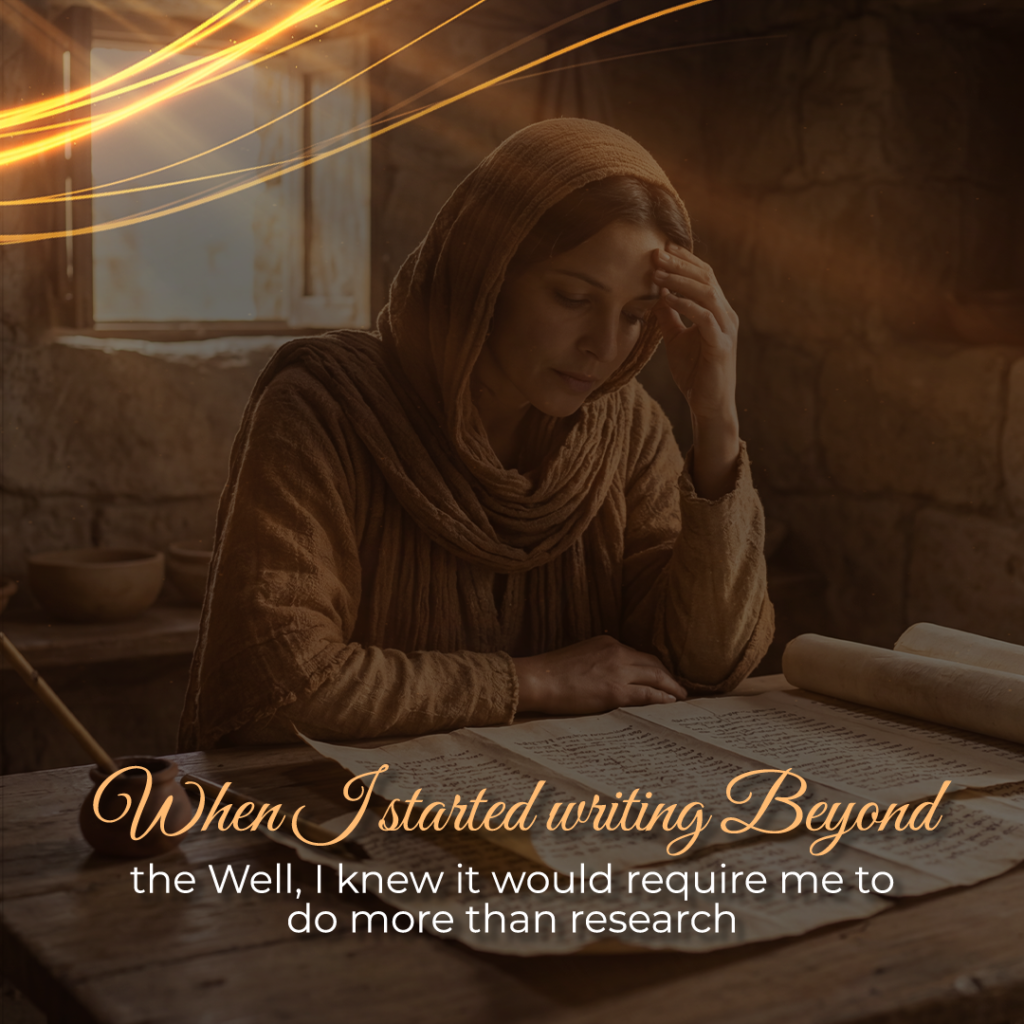
When I started writing Beyond the Well, I knew it would require me to do more than research When I started writing Beyond the Well, I knew it would require me to do more than research – it required me to justly study Ancient Samaria, and truly tell the story of an overlooked world. Ancient Samaria is one of the regions that is often mentioned in scripture. However, it has stayed misunderstood for centuries, but reveals an incredible history once you start digging. I wasn’t just building a character; I was building a culture, a landscape, a political climate, and an entire lived experience behind one of the most iconic encounters in scripture. The Gospels give us very little about the Samaritan woman. History gives us only glimpses of her world. So a lot of my work became piecing together the fragments we do have, cross-checking them with archaeology and anthropology, and then making creative choices where the record simply doesn’t speak. And yes — sometimes I stayed very close to the historical record. And other times…I fudged it a little. Here’s the truth about both. What I Stayed True To As well-established in history books, I also pivoted the tension between Samaritans and Judeans in my novel. Josephus has discussed this tension extensively, and the archaeologists also found evidence supporting this divide. There truly was hostility, suspicion, and centuries of fractured relationships. The household structures, arranged marriages, and exploitation of women are also historically accurate. Marriage in the ancient Near East in those times was nothing about building a ‘life together’, but a form of transaction. Marriage contracts, inheritance laws, and clan-based structures all supported the historical perspectives on women. So Photine’s lack of choice and her vulnerability within those structures isn’t an exaggeration — it’s the norm. Then there’s daily life. The mills, olive groves, stone houses, clay ovens, shepherding rhythms, market days — all of that comes directly from archaeological reports from Tel Balata (ancient Shechem), plus comparative studies of Iron Age and early Roman-period households. I wanted the practical world to feel solid beneath her feet. I also relied on historically documented widow practices. While Samaritans had their own version of the Pentateuch, their cultural and religious context around widowhood was the same as in the region. Widows often became properties of a brother’s household. Survival came first; everything else didn’t matter. And of course, Jacob’s Well itself is a real place — extraordinarily deep, historically attested, and sitting exactly where the story needs it to be. Where I Gave Myself Creative Freedom Let’s start with the obvious: we know almost nothing about her actual biography. So everything about her father, her brother, her early experiences, her marriages, her emotional landscape — that’s my imagination, shaped by what was plausible in her world. I also took liberties in describing the local resistance movements. Samaria absolutely had political unrest, splinter groups, teachers, and prophetic figures, especially during Roman encroachment. Josephus records at least one Samaritan prophet gathering people on Mount Gerizim. But did Photine’s father belong to a resistance group structured exactly as I wrote it? We don’t know. Could he have? Yes. The social tension was real; the individuals are fiction. Another area I shaped creatively was the domestic conflicts and seasonal rituals. Many of those details are pieced together from Jewish traditions, Samaritan practices, and what we know about ancient rural households. The emotional weight behind those rituals — the fear, the hope, the longing — is entirely novelistic. And if you’re wondering about the travel routes: yes, I played with distances. Ancient people walked everywhere, often farther than we’d imagine today, but I still tightened the narrative timeline for the sake of pacing. It’s not inaccurate so much as simplified. The deepest “fudges,” though, are emotional. The interior lives of the characters — how Jotham rationalizes his choices, how Leah copes, how Zimri wrestles with pride, how Photine learns to listen to her inner voice — these are places where history steps aside and story steps in. Why I Made These Choices Because Beyond the Well isn’t a textbook. It is a historical fiction, grounded in research but not limited by it. I attempted to honor the world she lived in while giving her the agency that the women of that time didn’t experience. The Samaritan woman was real.Her encounter with Jesus was real.But everything that came before that moment — the griefs, betrayals, patterns, cultural forces, and emotional scars that shaped her — those are lost to time. So I did what every historical novelist must do:I allowed scholarship to build the skeleton, and I let imagination fill in the flesh. Not carelessly.Not wildly.But thoughtfully, carefully, and always within the realm of what could have been. Sources That Informed the Novel Without giving away my entire research library, here are some of the most influential sources that shaped the historical world of Beyond the Well: These gave me the guardrails.The story filled in the space between them. At the end of the day, Beyond the Well stands in that delicate space between the documented and the imaginable. I hoped to give depth and dignity to a woman who was historically reduced to a single moment at a well — one that altered her life but didn’t define her whole story. Some things in the novel are absolutely grounded in history. Some are historically plausible reconstructions. And some are narrative choices made to give her the full humanity she was never allowed in the text. Truthfully, that is what historical fiction does at its best, restoring voice, color, and heartbeat to the places where history fell silent. Buy Now Recent Blogs 12 Feb 2026 Uncategorized Hagar: The First Person to Name God 12 Feb 2026 Uncategorized Some things need to be said. Not everything needs to be shown. 12 Feb 2026 Uncategorized The Messiah came out to a woman. The church has been uncomfortable ever since. Popular Blogs 01 Feb 2026 Uncategorized What
Sometimes freedom looks like leaving your stuff behind.
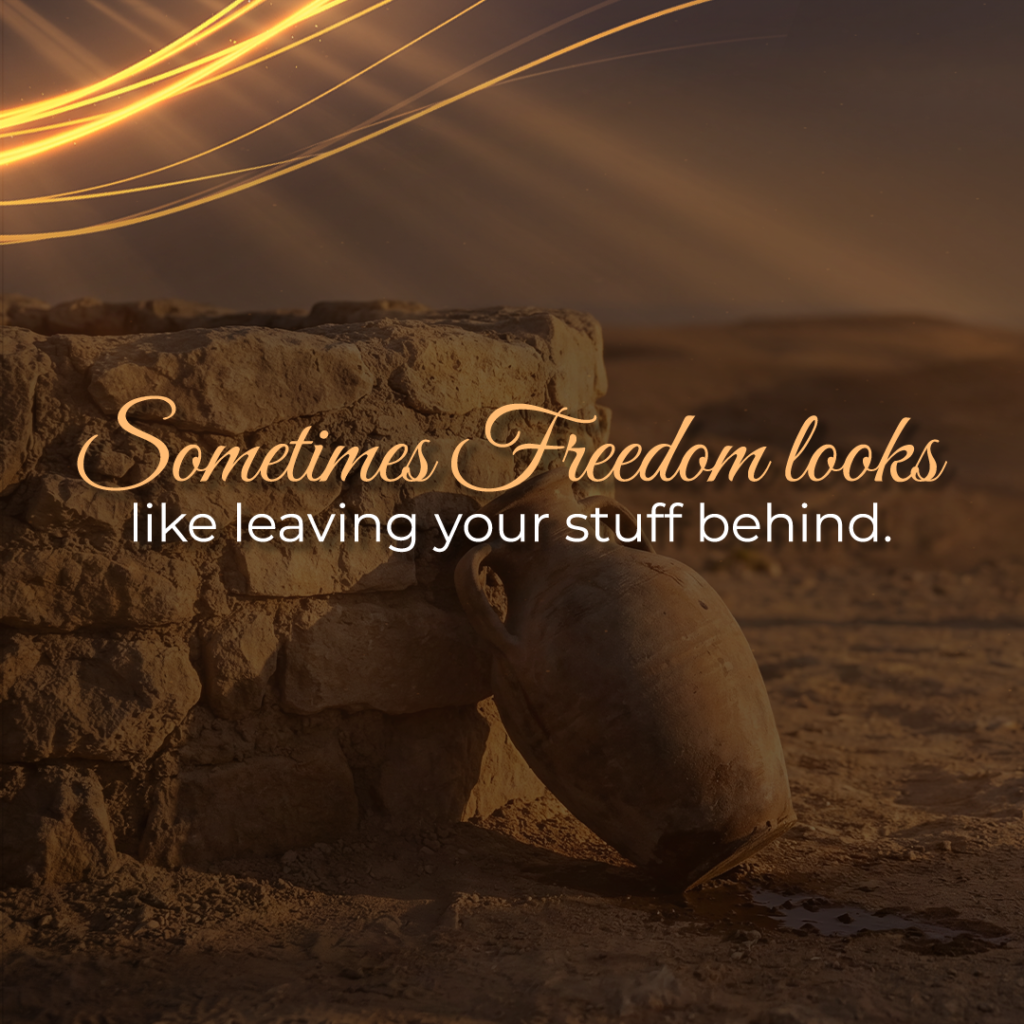
Sometimes freedom looks like leaving your stuff behind. Sometimes freedom looks like leaving your stuff behind. Sometimes the most powerful messages are well-hidden in the simplest scriptures. John 4:28 is one such example, “… then, leaving her water jar, the woman went back to the town…” What appears to be a minor detail tells a whole story of Photine’s spiritual encounter with Jesus. The story carries on with Photine rushing back to the same people she left to inform them of the man who transformed everything. However, in doing so, she forgets her jar – the very thing that stored water for her. She leaves her jar behind. In Beyond the Well, I leaned into this moment as the hinge between her old life and her new one. It’s not just that she forgot what she came to do at the well. It’s that the thing she brought to the well no longer mattered in the presence of what she found there. Her water jar—heavy, practical, necessary, the daily burden every woman carried—suddenly became an unnecessary weight. It symbolized the life she had been living: exhausting, repetitive, marked by scarcity and isolation. But after that spiritual encounter, she no longer needed the vessel she once depended on. Leaving the jar is not an accident. It’s a sermon. We all carry jars of our own. The things we believe we must lug around because we’ve always lugged them. The responsibilities that became identities. The shame we convinced ourselves we deserved. The emotional routines that feel like survival but function more like chains. The stories others wrote for us that we kept reading as if we had no other choice. And sometimes freedom looks less like gaining something new and more like releasing what we never needed in the first place. Photine doesn’t hide the jar. She doesn’t set it down gently. She abandons it. She runs off toward possibility, leaving behind the weight that belonged to her old way of being. Water jars in the ancient world weren’t symbolic—they were survival. And because they were survival, they were also limitations. They dictated a woman’s daily movement, her bodily labor, her social accessibility. To leave one behind, even temporarily, was almost unthinkable. The Gospel makes sure you know she did it anyway. Spiritual traditions often use physical objects to symbolize transformation. Prophets dropping their nets, Elijah throwing his cloak over Elisha, the abandoned spices Mary Magdalene once carried, but found the risen Christ instead. There is something profoundly human about realizing that what we carried into a moment isn’t what we will carry out of it. In Beyond the Well, her abandoned jar becomes a symbol of that pivot. This woman, who has been defined by loss, repetition, sorrow, and social exclusion, suddenly chooses something new—not just faith, not just hope, but movement. She moves because she is free. She moves because she has something to say. She moves because she is now defined by what she received at the well—the beginning of her spiritual journey. Sometimes the holiest thing we can do is drop what’s in our hands. The jar represents the old story. The water she finds represents the new one. And the very act of leaving something behind becomes the doorway into the life she was always meant to live. If you’ve read Beyond the Well, you already know this moment ripples outward through the whole narrative. And if you haven’t, I’ll just say this: every one of us has a water jar, and sooner or later, we reach the moment when we discover we don’t need to carry it anymore. Photine just shows us how to walk away from it—with purpose, with courage, with humility and strength, and with our hands finally free. Buy Now Recent Blogs 12 Feb 2026 Uncategorized Hagar: The First Person to Name God 12 Feb 2026 Uncategorized Some things need to be said. Not everything needs to be shown. 12 Feb 2026 Uncategorized The Messiah came out to a woman. The church has been uncomfortable ever since. Popular Blogs 01 Feb 2026 Uncategorized What if the scandal wasn’t her fault? 06 Feb 2026 Uncategorized Tamar: The Prostitute Who Saved the Messianic Line 12 Feb 2026 Uncategorized The Messiah came out to a woman. The church has been uncomfortable ever since.
What if you never had to prove you were clean?

What if you never had to prove you were clean? What if you never had to prove you were clean? The moment Jesus speaks of “living water” to the Samaritan woman in John 4, something seismic happens theologically—something we often miss because our modern ears hear poetry where ancient listeners heard revolution. This wasn’t just a comforting image. It challenged the entire system of ritual purity, sacred geography, and religious gatekeeping, cultural boundaries, shaping Jewish and Samaritan life in the first century. You’ll have to understand water to fully grasp the gravity of it. Not the water we turn on at a faucet, but the water of Torah. The water of the mikveh. The water of purity, birth, death, covenant, and belonging. Jewish water theology is deep and ancient. They needed the mikveh—a pool of naturally flowing, “living” water—for ritual purification. According to Leviticus, Numbers, and centuries of rabbinic interpretation, only mayim chayim, living water, was needed for ritual cleanliness after menstrual bleeding, childbirth, skin disease, sexual activity, or contact with the dead. (See: Leviticus 15; Mishnah Mikva’ot.) Living water wasn’t a symbol. It was the law. It was a boundary. It was identity. You were clean, or you weren’t.You were inside the community, or outside.You belonged, or you waited at the margins until someone else declared you pure again. And here is Jesus, sitting at Jacob’s well in Sychar, saying to a Samaritan woman—one who almost certainly lived in a constant state of ritual ambiguity and exploitation of women because of her marital history—“The water I give will become a spring within you.” (John 4:14) Within you. Not in a temple.Not in Jerusalem.Not in a priestly house or a ritual bath carved of stone.Inside the very person who has spent her life being told she is unclean. It is a theological defiance; it is also a form of female empowerment in Scripture. Scholars like Jacob Milgrom, Tikva Frymer-Kensky, and Carol Meyers described ritual purity in everyday life in ancient Israel—especially for women, who were subjected to the purity laws more strictly than men. Purity was ritual; it no more was only moral. But the consequences were social. To be ritually impure was to be excluded from communal worship and sometimes even ordinary social contact. Women lived with cycles of exclusion built into their bodies. So when Jesus says, in essence, “What you seek outside yourself has already been placed within you,” He isn’t offering comfort. He is dismantling a system. In Jewish tradition, living water restored a person to the community.In Jesus’ reframing, living water restores a person to themselves. This shift—from external purity to internal transformation—is why this metaphor still resonates across millennia. Because spiritual thirst is not an ancient experience. It’s human. Needing permission to belong is human. Water has always been a symbol of God’s intervention. The prophets used it constantly: Isaiah crying out, “Come, all you who are thirsty…” (Isaiah 55), Ezekiel speaking of God sprinkling clean water on the people (Ezekiel 36), the Psalmist longing for God “as a deer pants for streams of water” (Psalm 42). Even in the Dead Sea Scrolls, the Community Rule at Qumran considers living water to be a source of spiritual renewal. But Jesus did something entirely different from these beliefs. He removed the temple, the priesthood, the ritual bath, the sacrifice, the boundary, and the conditions—something none of them dared to even think. He places the well inside the person who asks. Living water is not something she must find. It is something that finds her. This is why early Christian mystics, desert fathers, and even Gnostic communities seized on the image. The Gospel of Thomas alludes to springs within the human being. The Dialogue of the Savior from the Nag Hammati Codex III speaks of flowing water as divine knowledge. The Gospel of Mary describes inner sight and inner renewal. The Eastern Church later called Photine “the Enlightened One”—her name itself meaning “light,” the natural companion of water in ancient spirituality. And it all traces back to a single conversation at a well. What if you never had to prove you were clean?What if purity was not a requirement for belonging?What if the Source you seek has been within you from the beginning? That is what Jesus told her.And in the simplest, most radical way possible, He told it to all of us. If you’ve been reading my work or following the journey behind Beyond the Well, you already know how this metaphor shaped the entire book. And if you haven’t stepped into that story yet, I’ll just say this: the living water that met Photine at the well didn’t stop flowing. It hasn’t stopped in two thousand years. And it still rises wherever a thirsty soul dares to listen. Buy Now Recent Blogs 12 Feb 2026 Uncategorized Hagar: The First Person to Name God 12 Feb 2026 Uncategorized Some things need to be said. Not everything needs to be shown. 12 Feb 2026 Uncategorized The Messiah came out to a woman. The church has been uncomfortable ever since. Popular Blogs 01 Feb 2026 Uncategorized What if the scandal wasn’t her fault? 06 Feb 2026 Uncategorized Tamar: The Prostitute Who Saved the Messianic Line 12 Feb 2026 Uncategorized The Messiah came out to a woman. The church has been uncomfortable ever since.
How to Write Women in Ancient Worlds Without Modernizing Them
How to Write Women in Ancient Worlds Without Modernizing Them How to Write Women in Ancient Worlds Without Modernizing Them Your medieval heroine shouldn’t sound like she has a therapist. Historical fiction comes with its own kind of challenges. One of the most prominent challenges is writing ancient characters and not making them appear modern. It is not only the clothes and settings that need to be set in the right time, but also the mannerisms of the characters. You can’t have a character set in the Bronze Age talking about therapy or boundaries. It just doesn’t fit the cultural and religious context. That’s where the real trouble begins – when you want your character to think ‘modern’ while keeping her in the ancient times. Most of the time, writers do this unintentionally. Often, the intent behind it, I believe, is to portray a character with a strong inner life, but suddenly the character starts sounding like someone living in New York in 2025. We need to understand the historical perspectives on women. Ancient women also had their ambitions, wants, needs, dreams, and thoughts – but they weren’t expressing any of them. They didn’t have the psychological frameworks, social freedoms, or cultural assumptions we do. They wouldn’t talk about self-worth or personal identity. For them, they understood honor, shame, survival, clan, god, and community were more easily acceptable concepts than identity, self-worth, and emotional healing. So, your ancient heroine needs to think similarly. One of the best ways to avoid accidentally modernizing your characters is to think about agency differently. Modern agency looks like autonomy: choosing your own path, speaking your truth loudly, defying systems, breaking molds. But in most ancient cultures, especially patriarchal ones, women’s power didn’t show up in open confrontation or individual rebellion. It showed up in strategy. In timing. In social intelligence. In managing relationships. In managing scarcity. In knowing exactly when to speak and when to stay silent. Any ancient heroine doesn’t have to publicly announce her rebellion; she only needs tact and skill to navigate her way out. That would be empowerment through adversity of those times. When you start writing women this way, something shifts. Their power feels real, not artificially inserted. Instead of giving them modern freedoms they never had, you give them the ability to move the world from inside its constraints. That’s how someone like Hagar survives. It’s how Tamar changes history. It’s how Photine becomes a catalyst in Beyond the Well—not by having modern independence, but by learning to work within (and sometimes cleverly around) the structures that try to define her. If you want to build an authentic voice for ancient women, research becomes your best friend. Not the stiff academic kind—though there’s a place for that—but the kind that pulls you into the lived reality of the time. Read primary sources when you can. Read anthropology about how similar cultures work today. Look at how honor-based societies conceive of status, speech, shame, and resilience. And pay attention to how people navigate danger or oppression without using modern psychological language. You’re not trying to mimic the literal speech patterns of the ancient world—your readers would revolt—but you are trying to match the worldview behind the words. As writers, we need to play with tact. The women of the Bronze Age felt jealousy, hope, love, anger, and grief just like any other woman would. The struggles of Biblical figures are relatable; however, what language we use to describe those emotions for ancient women makes all the difference. Emotions are universal and timeless, but the perspective needs to be set in a particular time. This is where writing shines, in the tension between what is timeless in us and what is shaped by the worlds we’re born into. Photine is the perfect example of how this works. When she secures her fourth marriage with Barshai, nothing about it is modern or inspirational. She doesn’t think in terms of empowerment or boundaries. She thinks the way a first-century woman actually would, safety comes through attachment, travel requires a man’s name, and survival often depends on being claimed by someone with resources. Her emotions are universal — anger, desperation, disgust, grief, determination. Any woman today could recognize those. But the way she acts on them is shaped entirely by her world. She studies Barshai, not to manipulate him but to know his weak spots – and that in a way, made her hold some power over him. When she lingers too close to him, she isn’t finding something meaningful there; rather, it’s her attempt at staying alive. A modern Photine might talk about autonomy or emotional healing. The real Photine calculates survival in the currency available to her; usefulness, care, attentiveness, and the illusion of devotion. It’s not pretty, but it’s historically honest. Her strategy feels manipulative because it is — but it’s the kind of manipulation women in dangerous systems had to use to carve out slivers of control. And that’s the point. The emotions are timeless, but the worldview is ancient. Photine doesn’t break character by sounding like us. She survives by thinking like a woman of her time — making the choices she actually had, not the ones we wish she did. In the end, that’s the real craft challenge: letting ancient women be fully human without dragging them into a modern mindset. Photine isn’t relatable because she sounds like us, she’s relatable because she feels like us while navigating a world we’ve never lived in. And when writers honor that tension, the story gains a kind of honesty that no amount of modern “fixing” can improve. That’s how you write ancient women who breathe. Buy Now Recent Blogs 12 Feb 2026 Uncategorized Hagar: The First Person to Name God 12 Feb 2026 Uncategorized Some things need to be said. Not everything needs to be shown. 12 Feb 2026 Uncategorized The Messiah came out to a woman. The church has been uncomfortable ever since. Popular Blogs 01 Feb
The Women Who Didn’t Make the Cut: Characters I Had to Delete

The Women Who Didn’t Make the Cut: Characters I Had to Delete The Women Who Didn’t Make the Cut: Characters I Had to Delete Sometimes the best writing is the writing you delete. Every novel has ghosts — not the supernatural kind, but the characters who once walked the page before you gently escorted them out. While writing Beyond the Well, I came across several women who intrigued me with their backstories, flaws, motives, and voices. And yet…they didn’t belong. This is the quiet discipline of storytelling: knowing when to let go.Not every character is meant to stay, even if you love them. Some crowd the narrative. Some dilute the emotional arc. Some are simply too loud for the space they’re in. Here are a few of the women who didn’t make the final manuscript — and why removing them ultimately made Beyond the Well stronger, and kept character development for me moving forward. Yaffa — The Midwife Who Belonged to Another Story Yaffa was one woman whom I thought of writing in this story, but somehow knew she belonged to another story. Yaffa, a wise and hurried traveling midwife whom time had made soft and sharp – just like women in Old Testament – carried herbs in her sash and the trust of many in her authority. I imagined her as deeply observant — the sort of woman who notices when a girl hides her trembling hands or when the silence of a wife becomes too heavy to carry alone. In an early draft, Yaffa arrived at Photine’s home shortly after her marriage to Jotham. She brought medicinal teas, a basket of dried figs, and what I lovingly call “midwife truth” — the kind that feels like comfort and warning at the same time. She offered Photine her first real moment of gentle, woman-to-woman counsel:wisdom about marriage, survival, and the quiet kinds of strength women are expected to master. She recognized Photine’s fire long before Photine ever dared name it. Yaffa was wonderful — too wonderful, in fact. She softened the story long before the story earned softness.Her presence gave Photine a lifeline too early, a place for emotional healing when the reader needed to feel the ache of her isolation. Yaffa also competed with the later and far more important connection Photine developed with Lois. Two wise women in close succession muddled the arc, and Lois needed the full narrative space to take root. But the biggest reason? Yaffa belonged to another story. As I worked, I realized she carried shadows and threads that didn’t originate in Photine’s world at all. Her voice felt older, deeper, more scarred — as if she had already lived through overcoming oppression, love, and sacrifice, and a story that Photine’s book wasn’t meant to tell. And I eventually understood why. Yaffa didn’t disappear.She simply stepped aside until her own story was ready. Readers will meet her — not in Beyond the Well, but in the book that follows it, where her history, her losses, and her role as a midwife take center stage in a much darker, more emotionally complex narrative. Deleting her here wasn’t an ending.It was an act of narrative restraint — and a quiet promise. Narrative restraint also means emotional restraint.Sometimes a story gains power by limiting who gets to comfort the heroine and when. Yaffa’s absence strengthened Photine’s early chapters…and her presence will strengthen another woman’s journey later. Tizah — The Marketplace Woman Who Became Photine (Eventually) Tizah was a spirited woman, with a basket on one arm and a voice that could pierce through crowded markets. She was quick-witted, observant, and had a memorable charm. In early drafts, she felt like a breath of relief. Someone who could offer Photine a moment of sisterhood amidst the harshness of her early life. She walked into Photine’s marketplace scenes with instant familiarity, teasing her into confidence, sharing figs, and offering gentle, knowing commentary about the men who tried to out-bargain her, and also offering a sense of female empowerment in Scripture. She was warm, grounded, competent — and she seemed to understand Photine instinctively. But that was the problem. Tizah didn’t just pull focus.She blurred the line between who Photine was and who Photine would become. Every time Tizah stepped onto the page, I realized she was carrying pieces of my protagonist’s future self—the boldness she earns later, the humor sharpened through survival, the marketplace competence she develops only after trauma reshapes her life. If Tizah stayed, she would give Photine too soft a landing. And worse, she would steal Photine’s arc of faith and perseverance, and personal growth through faith. Tizah represented the finished version of a woman Photine had not yet grown into.And Photine needed the space to earn every step of that transformation. So I made a choice I didn’t expect:I didn’t just delete Tizah.I absorbed her. Her quick tongue.Her steady confidence.Her ability to read a room full of men and find the seam of power.All of these belonged to Photine — just not yet. Removing Tizah wasn’t killing a character.It was giving Photine room to breathe, grow, and become the woman she was meant to be. Tizah doesn’t have a place in my current manuscripts — because she’s alive inside another woman’s evolution. But I suspect readers might one day encounter echoes of her, another sharp, resilient woman in the marketplace of a future story, or perhaps a descendant of the fire she carried. Characters who resonate never truly disappear.They wait.They shift.They return in new forms. Some characters aren’t distracting because they’re unnecessary.They’re distracting because they’re premature. Tizah was the woman Photine would one day grow into.And when you give a character their own shadow too early, the reader can’t feel the weight of their becoming. Her absence allowed Photine’s vulnerability to matter.Her absorption into Photine allowed Photine’s strength to feel earned. And once again, narrative restraint revealed its quiet truth:Sometimes the character you delete is really the character you’re still writing. Writing a
Tamar: The Prostitute Who Saved the Messianic Line
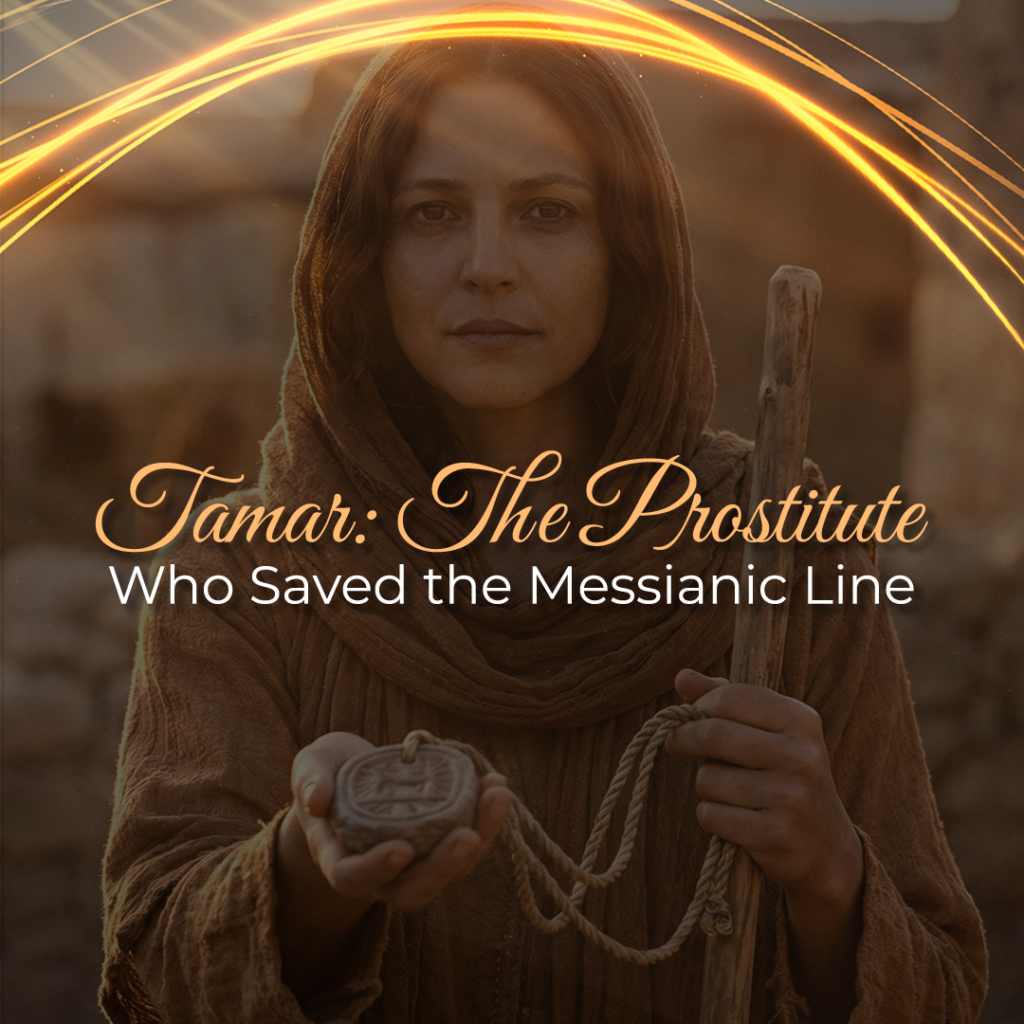
Tamar: The Prostitute Who Saved the Messianic Line Tamar: The Prostitute Who Saved the Messianic Line Matthew included her. We should too. Not all stories are told aloud, some are hushed, and told in whispers. Often, these stories are of the Biblical women. Tamar’s story is one of them, perhaps because it challenges the assumed Biblical values the character must have. Still, New Testament tells her tale, and should we, especially when it comes to historical perspectives on women in the Scripture. When he traces the genealogy of Jesus, he includes exactly four women before Mary.Not Sarah.Not Rebekah.Not Rachel or Leah. He chooses Tamar. Why?Because without her courage, her agency, and her audacity to claim justice in an impossible situation, the Messianic line would have died in the shadows of Judah’s house. This is her story—and why Matthew refuses to write Jesus’ lineage without her. Genesis 38 interrupts Joseph’s story and makes one wonder where is the Scripture taking us with this story. Judah marries and has three sons: Er, Onan, and Shelah.Tamar marries Er.Er dies—“wicked in the sight of the Lord.” According to the custom of levirate marriage, the next brother, Onan, is responsible for giving Tamar a child to continue his brother’s line.Onan refuses, using Tamar but denying her pregnancy. Because he wants the inheritance for himself, which is clearly exploitation of women. So Onan dies too. Judah panics.Two sons dead.One woman in common.He decides Tamar must be the problem. So, Tamar is sent to her father’s house, where she cannot remarry, have her own children or even move forward. Then, quietly, he never sends for her again. Tamar is written out.Forgotten.Suspended in injustice. Except she refuses to stay erased. Tamar finds out that Judah is traveling to Timnah. She removes her widow’s clothes, veils herself and then positions herself beside the road where Judah will pass. When Judah sees her, he believes she is a prostitute and propositions her. In return, Tamar demands Judah’s seal, cord, and staff, and they sleep together.She conceives. Three months later, when her pregnancy is discovered, Judah orders her to be burned alive. But Tamar steps forward and holds up the proof: “The man who owns these is the father of this child.” Judah looks onto his own seal, his own staff, his own cord, and says the words that splits Genesis open: “She is more righteous than I.” This is not righteousness in terms of sexual behavior.It is righteousness in terms of justice.She acted faithfully.He did not. Tamar then gives birth to twins, Perez and Zerah, with Perez carrying on Messianic line. Her courage kept the promise alive. And her story reveals her humility and strength, and not submission. Matthew chooses Tamar for reasons that should shake us awake. Tamar exposes the failure of powerful men. Tamar reveals Judah’s negligence and hypocrisy by holding up the evidence. Tamar acts with agency in a world that gave her none. She refused to remain erased, refused to let injustice speak the final word over her life, refused to let the covenant line die under male failure. Tamar embodies God’s commitment to the marginalized. God does not preserve the Messianic lineage through kings or priests here. God preserves it through a woman society dismissed, abandoned, and condemned. Tamar’s courage allowed Jesus to come from Judah’s line. In a very real sense, she saved the story Joseph’s brothers tried to destroy. Matthew wants us to see that Jesus’ story begins in scandal and then redemption and forgiveness. Tamar is not included despite the scandal. She is included because of what she reveals: Grace moves through the margins.Redemption grows in unexpected soil.And God is not ashamed of the stories we are ashamed of. The truth is, Tamar confronts us with questions we rarely ask: Tamar is not passive.She is not obedient in the way we sanitize biblical womanhood.She is fierce and strategic.She knows the law better than Judah.She holds God’s promises more faithfully than the patriarchs. And Matthew looks at her courage and says,“Write her name down. Don’t you dare forget her.” In a Bible that often centers men, God ensures this woman’s story remains unburied.Her name sits in Jesus’ genealogy like a burning torch, illuminating the truth, God does not build salvation stories out of perfect people. God builds them out of the overlooked, the mistreated, the courageous, the ones who had to fight to be heard. Tamar tells us “Your story matters—even the parts they tried to hide.” And when Matthew begins the New Testament by writing her name, he is telling us, “The Messiah comes through women who refused to disappear.” Tamar’s story is no different than Photine’s in Beyond the Well. Tamar is also a woman overcoming oppression in the system that never sees or hears her. She is the example of empowerment through adversity, faith and perseverance, and personal growth through faith. And this is the heartbeat of Beyond the Well. To illuminate the women who carried courage in the shadows, who used the means available to them to claim agency, dignity, and life. Tamar fought for her future.Photine fights to survive hers.Both reveal a God who sees women fully—even when their communities do not. In telling Photine’s story, I stand in a long tradition of remembering women whom history tried to silence. Tamar’s name appears boldly in the genealogy of Jesus because the Gospel insists on remembering her. Photine’s encounter at the well is preserved because Jesus Himself refuses to let her remain invisible. These women remind us that redemption often begins in the places we’d rather skip over, in scandal, in suffering, in resilience in faith, in audacity. And that’s why their stories matter.That’s why Photine’s story matters.That’s why your story matters. As we follow Photine through her own journey of pain, identity, and transformation, the spirit of Tamar stands just ahead of her, whispering the same fierce truth across generations: “You were never meant to vanish. Your story is worthy of being seen.” Buy Now Recent Blogs