Dr. Lauree Brown
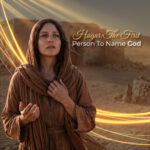
Hagar: The First Person to
Name God
Hagar: The First Person to Name God
She saw God see her. Everything changed.
Not many want to say her name, let alone her story. Where most stories are told and retold by many, Hagar’s story is whispered only among a few. She wasn’t a prophet or a matriarch, but Hagar’s story didn’t receive the fairness or dignity it deserved. Her story is mentioned in Genesis 16 as Abraham’s slave. Even though she is among the Biblical women, Hagar’s story is told because someone else owns her.
Hagar’s story is of surrogacy in the Bible. Hagar became a surrogate when Sarah couldn’t conceive, but the story doesn’t say if Hagar negotiated, consented, or if she was asked about this. But as soon as she became pregnant, things changed drastically for Hagar. Sarah started resenting her, Abraham sided with Sarah, and Hagar became the easiest person to blame. So, the best option for her was to leave. So, she ran. Pregnant, exhausted, terrified, Hagar went into the desert. Alone and tired, she rested at a spring, where something extraordinary happened – God’s intervention happened.
Scripture says “the angel of the Lord found her,” and that phrase matters. Up until this point, God has spoken to men, patriarchs, and leaders. But here, God seeks out a woman who has been pushed out of her home and discarded.
The conversation between God and Hagar is simple, direct, and shockingly personal. He doesn’t dismiss her experience. He doesn’t tell her to toughen up or pretend her suffering doesn’t matter. He acknowledges her. He tells her she’s carrying a son. He makes promises about her future. He treats her as someone whose life actually has value.
In this very moment, Hagar names her God – something that even prophets haven’t done before. She says, “You’re El Roi,” which translates to the God who sees me. It wasn’t a revelation or some prophetic feat; Hagar named her God as the only one watching over her, looking after her, truly seeing her, when everyone else deliberately turned away from her. When all the seeing eyes turned blind, the All-seeing God saw everything. Hagar’s story is crucial as her naming of God becomes a part of the Scripture and teaches us Biblical values of faith and perseverance.

Hagar’s story challenges the assumption that God works only through the powerful or the chosen. God is looking after and seeking the unseen, unheard, and discarded people, too. It also helps us understand overcoming oppression with faith better, because spiritual encounters occur not when you’re safe, they happen when you find yourself most helpless and troubled.
This is exactly why Hagar’s story helps us understand Photine in Beyond the Well. Like many others, Photine is also the woman who stands alone in her crisis and is misunderstood by her community. She is forced to carry the shame that isn’t hers, and her struggles go unheard and unnoticed. Photine, similar to Hagar’s story, also encountered God at a place where she went to seek relief from her pain. The place wasn’t some place of honor or a well-kept sanctuary – it was a well.
At the well, when Jesus met Photine, He saw her in the same way God had found Hagar. He doesn’t condemn her, only acknowledges her past. He told her that her life also mattered the same way any other life matters. And most importantly, He offered her something no one else had before – clarity, dignity, and living water.
Hagar’s story matters for us too. Hagar showed us that God does not prefer the most notable over the unseen woman. He meets them where they are and offers them what they couldn’t imagine on their own.
Recent Blogs


Popular Blogs


Dr. Lauree Brown
A historical fiction author who brings to light women’s resilience and faith through powerful and impactful storytelling.